In the spring of 2020, during the peak of the pandemic in New York City when all public schools were remote, I facilitated the design and implementation of a 20-lesson memoir unit with a Brooklyn middle-school teacher team. I built a single linked system connecting every lesson’s objective and assessment to a daily slide deck, mentor texts, a teacher model, a standards-based rubric, student samples, and conferencing tools. At the end of the year, I created and led a 2½-hour professional-learning session to introduce the completed unit to teachers at other schools and support them in adapting it for their own classrooms.
Context
NYCPS Academic Response Team, 2020
Scope
20 lessons, fully linked
My role
Design lead and facilitator
Transfer
2½-hour session for other schools
ProcessCo-planned and co-taught with teachers over Google Meet, then compiled the slides, mentor texts, guidance, and rubric into one place so the unit could be understood and used, not just read.
01
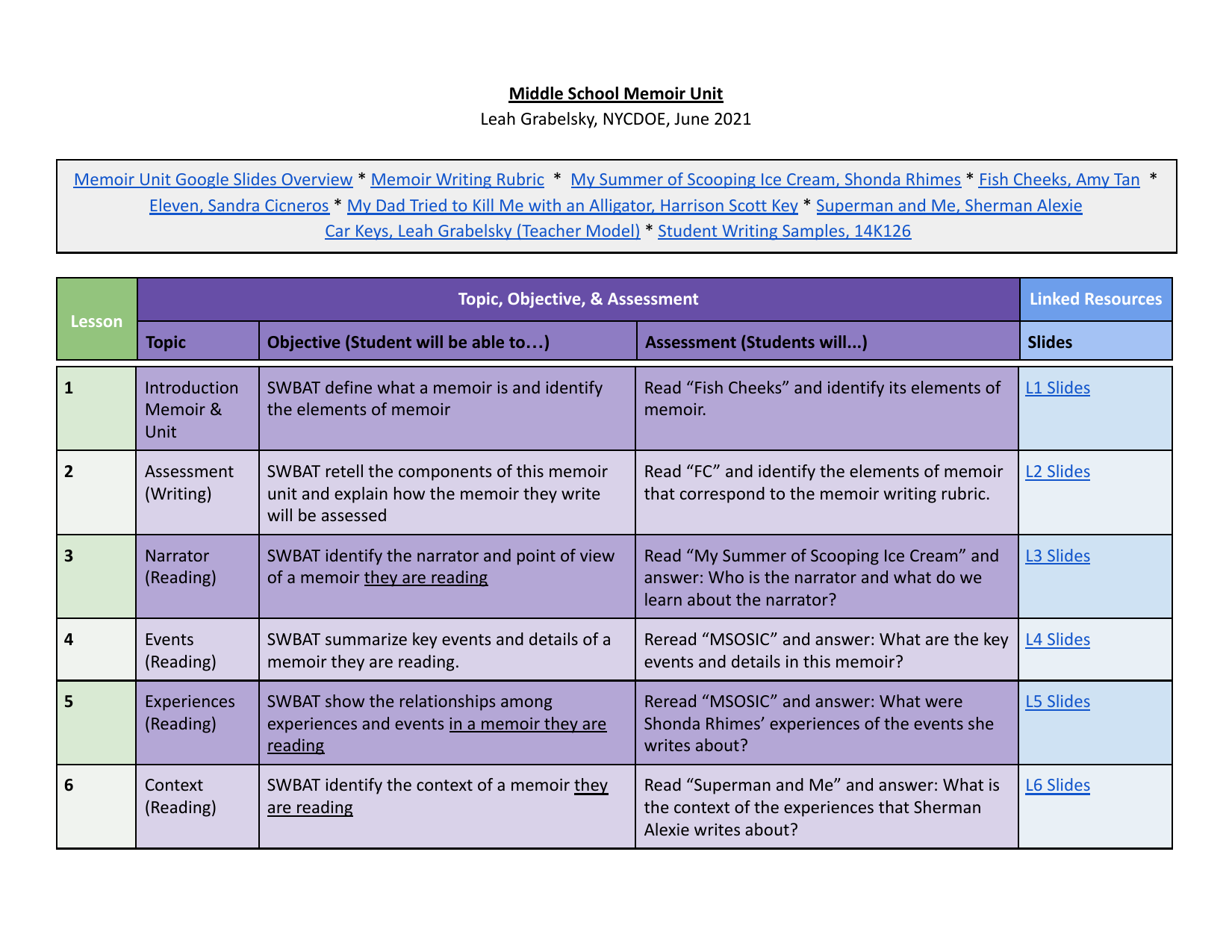
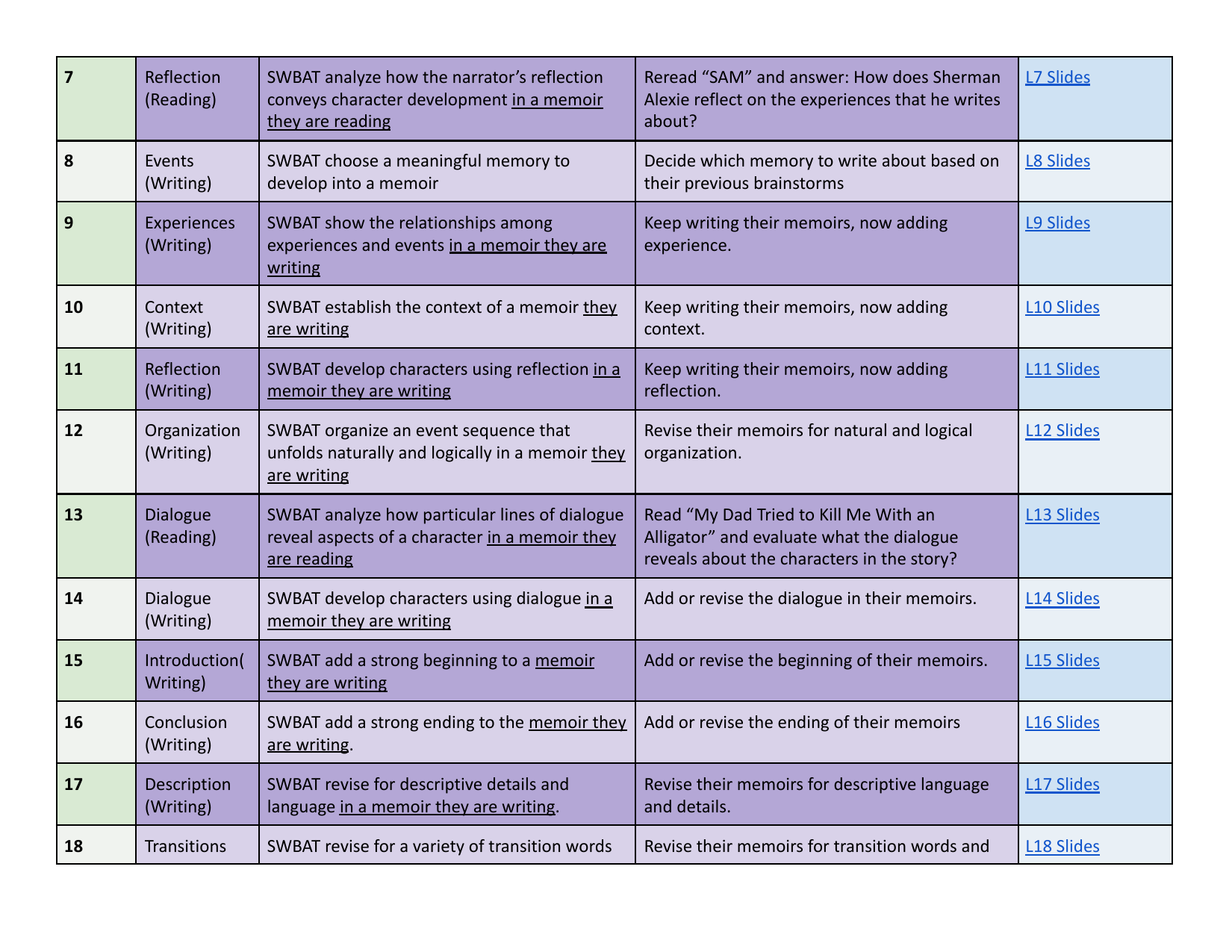
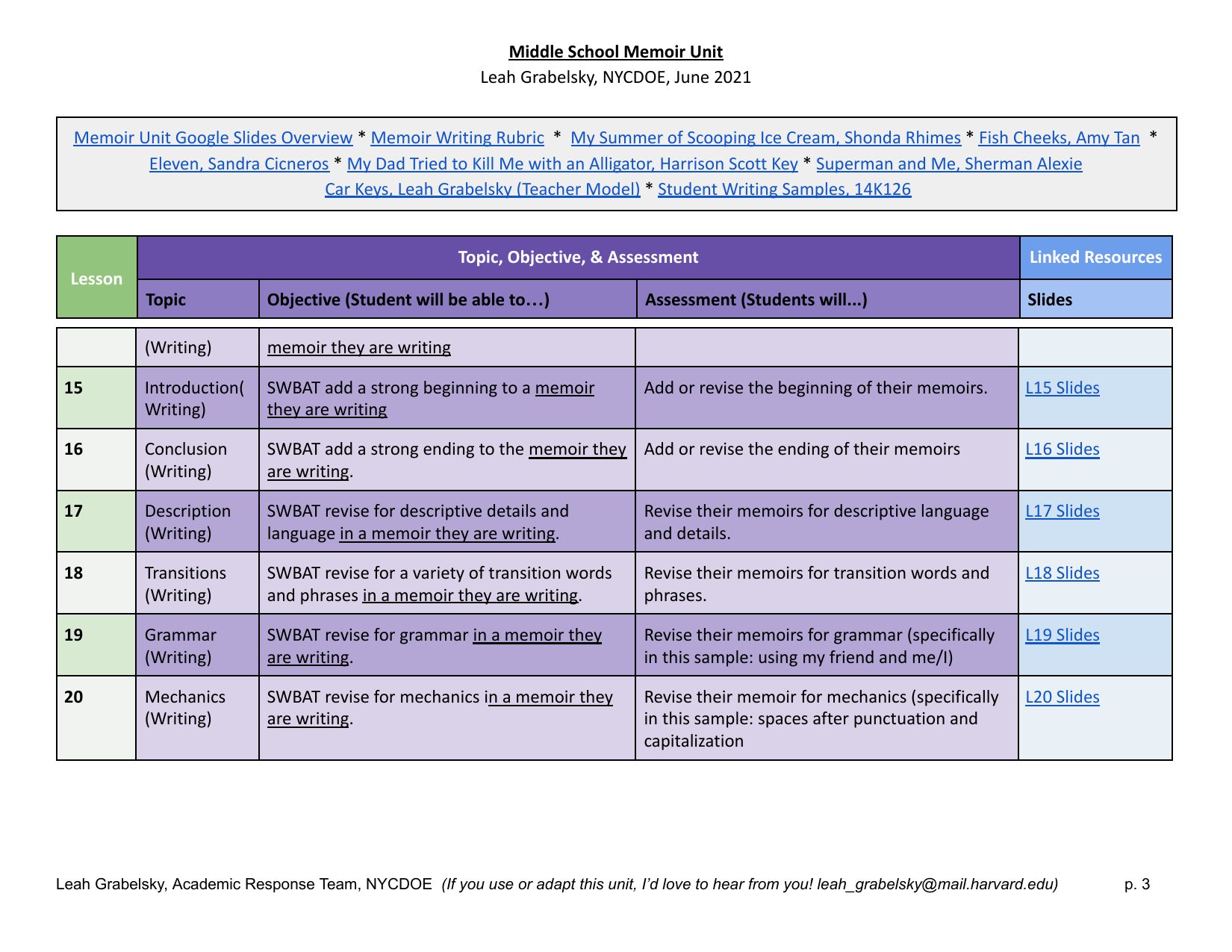
The 20-lesson unit map
The three-page map is the unit’s base camp: it sequences all 20 lessons, pairs each objective with a corresponding assessment and slide deck, and links the shared texts and tools used across the unit. All three pages are shown in full below.
Page one: the unit’s linked resources sit at the top, above the lesson-by-lesson table pairing each objective with its assessment and slide deck.Page two carries the sequence from Lesson 7 through Lesson 18, including Lesson 11, where students add reflection to their own memoirs.The final page closes the arc through Lesson 20, ending in publication and reflection.
02
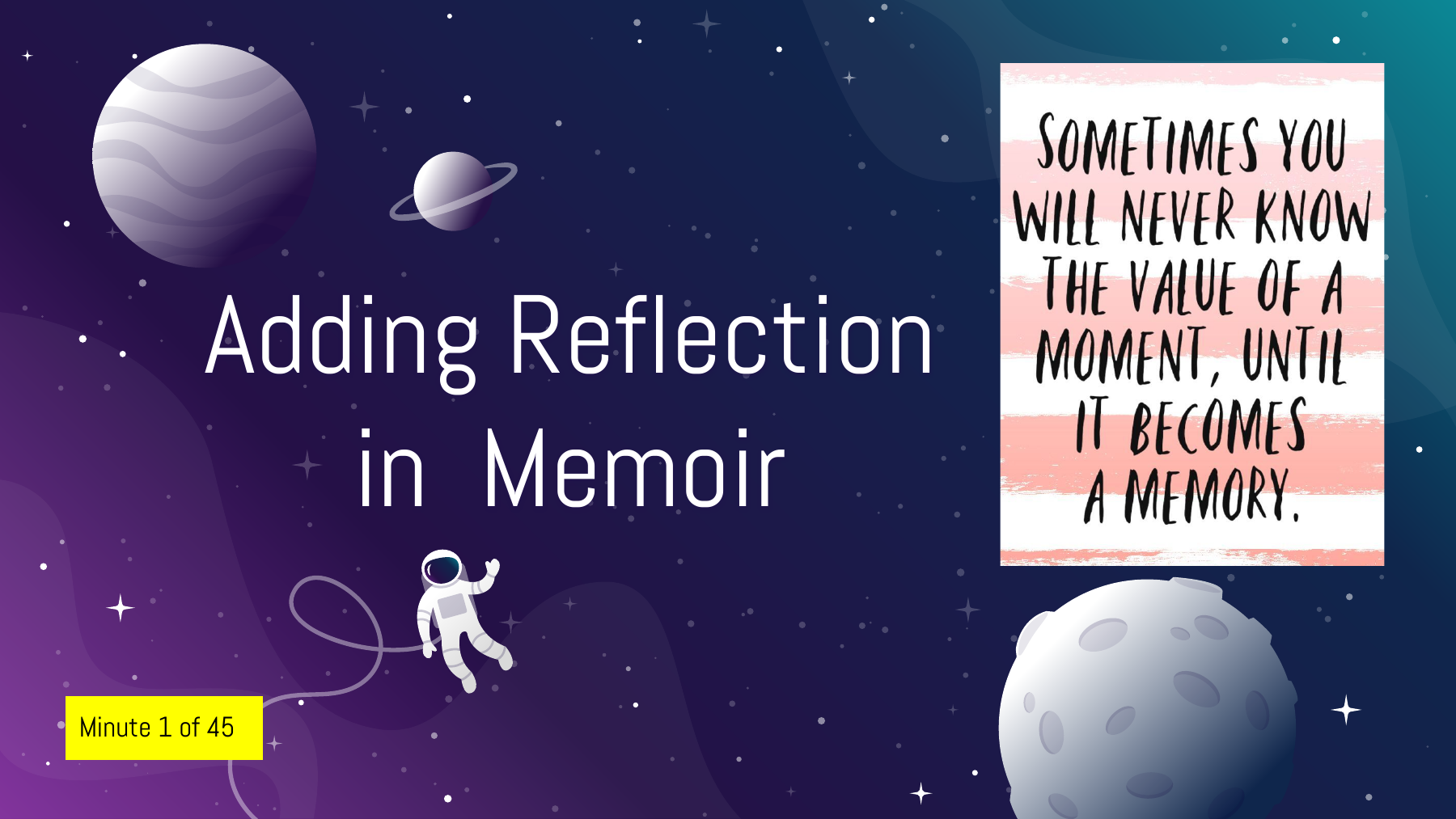
Lesson 11: Adding reflection in memoir
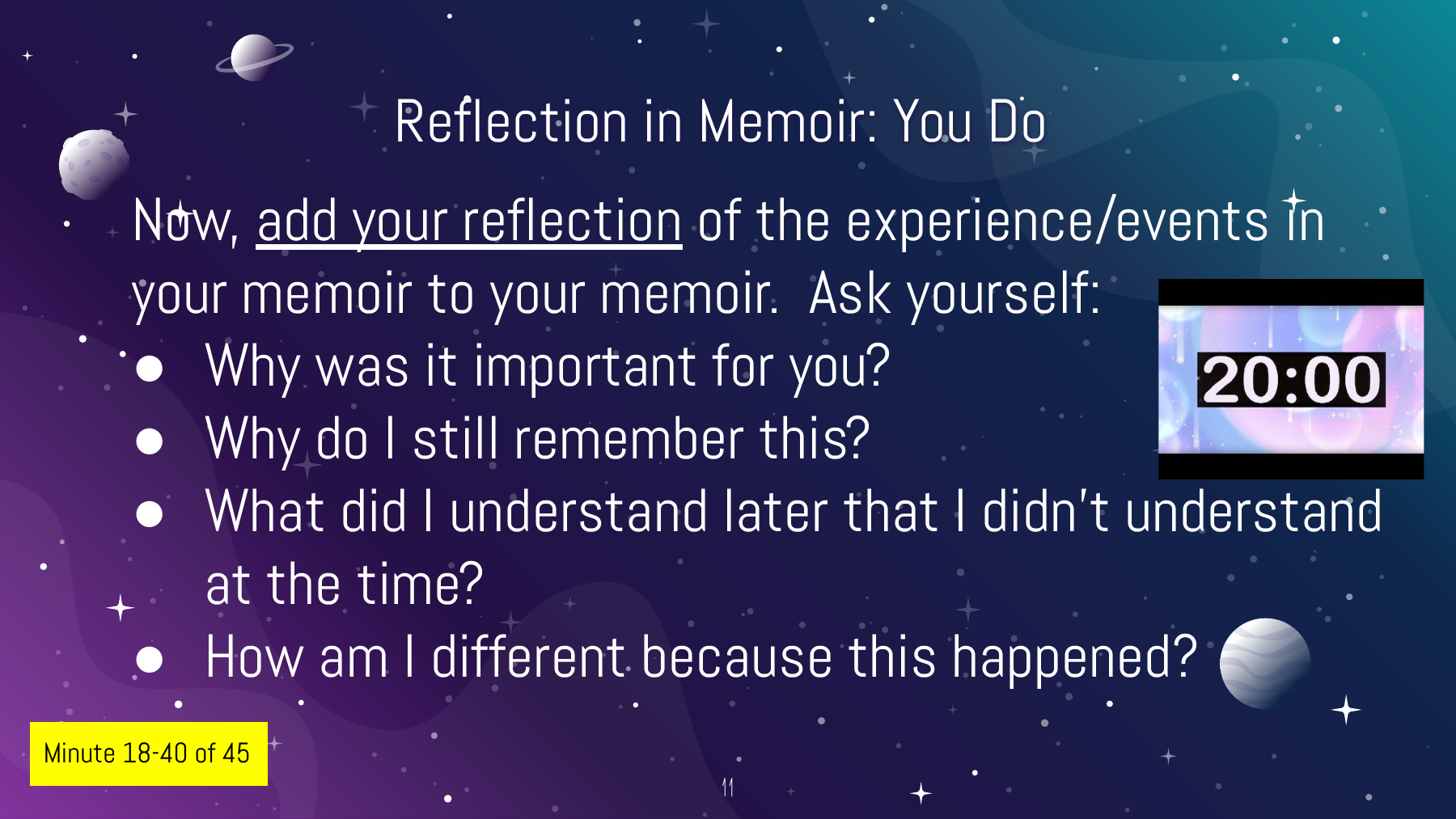
The linked lesson moves from a named reflection focus and objective through teacher modeling and independent writing. Every lesson in the unit follows this same shape, which is what let teachers adapt it without rebuilding it.
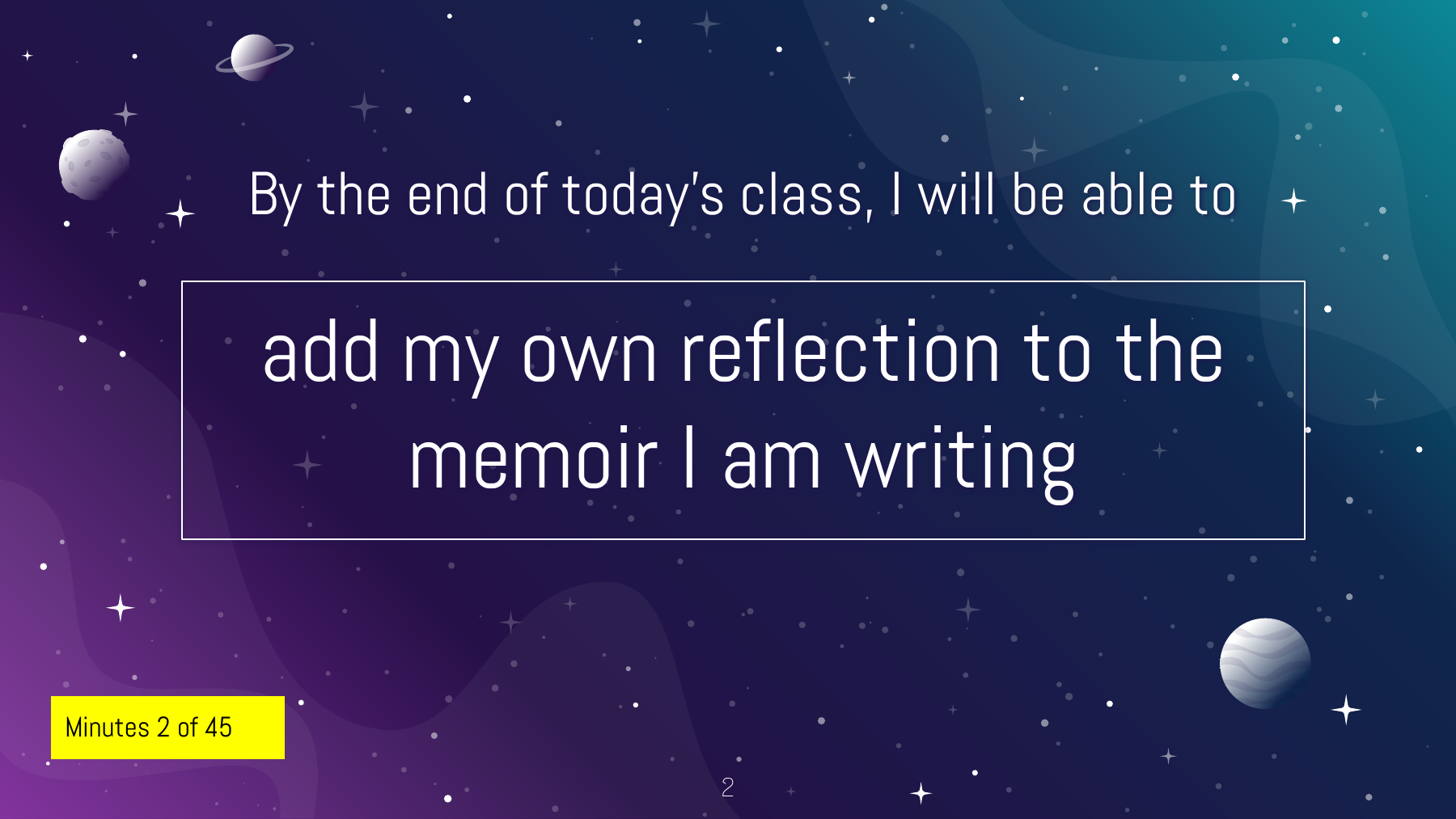
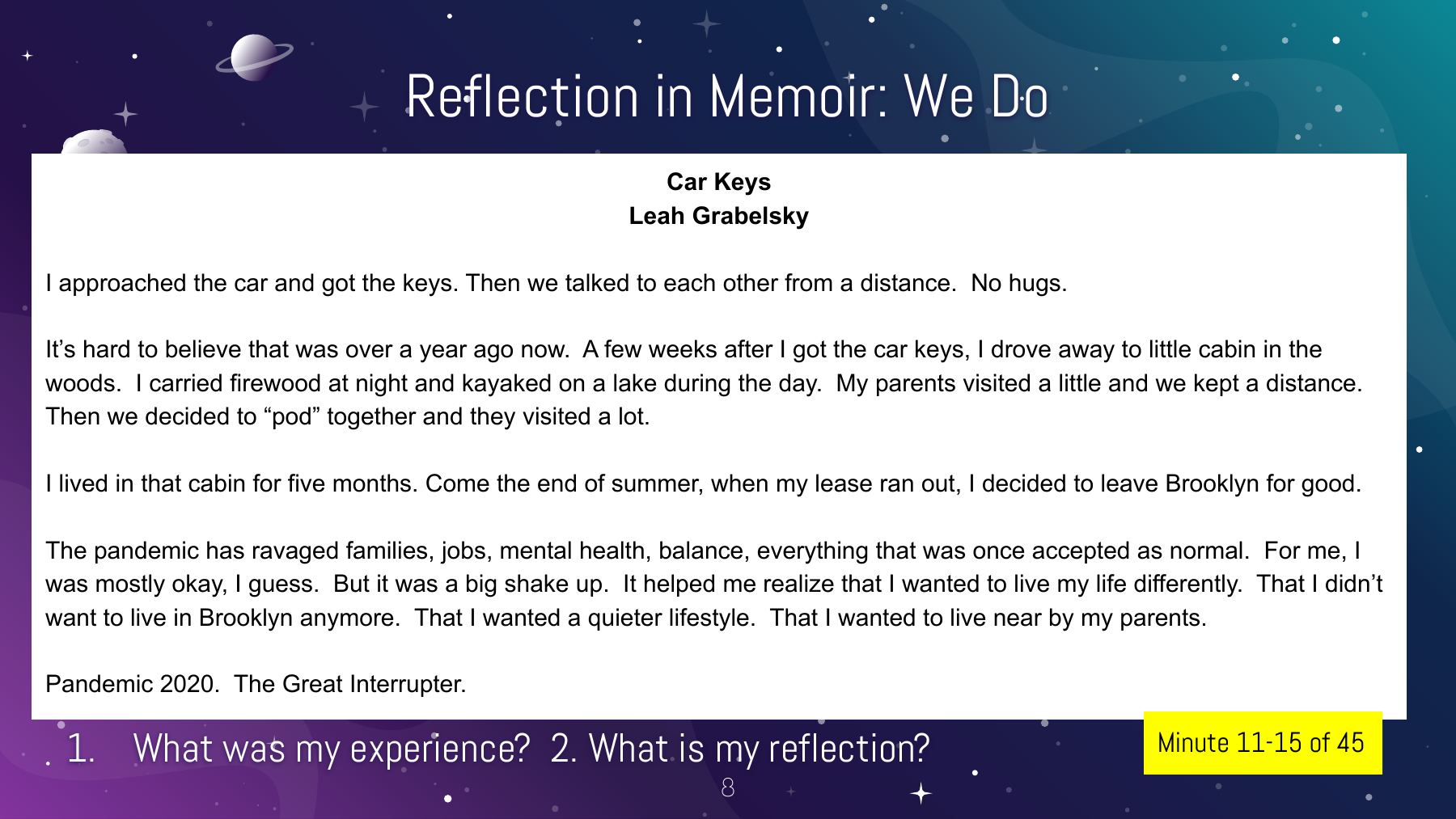
01Lesson focusThe deck opens by naming the reflection writing move.02ObjectiveStudents prepare to add their own reflection to a memoir.03Teacher modelingMy memoir “Car Keys” makes the writing move visible.04Independent writingStudents apply the move in their own memoirs.
At the end of the year, I created and led a 2½-hour session to introduce the completed unit to teachers at other schools, make its instructional model explicit, and support adaptation.
1 / 23Click a thumbnail, or use the arrow keys
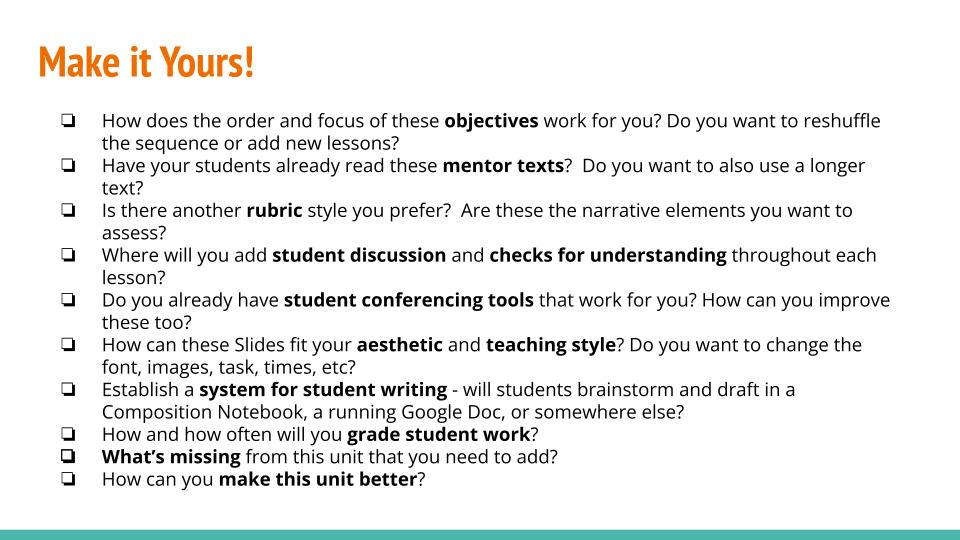
The complete 23-slide session, hosted here in full. Student names, student faces, and the text of the teacher-written model are redacted.