01
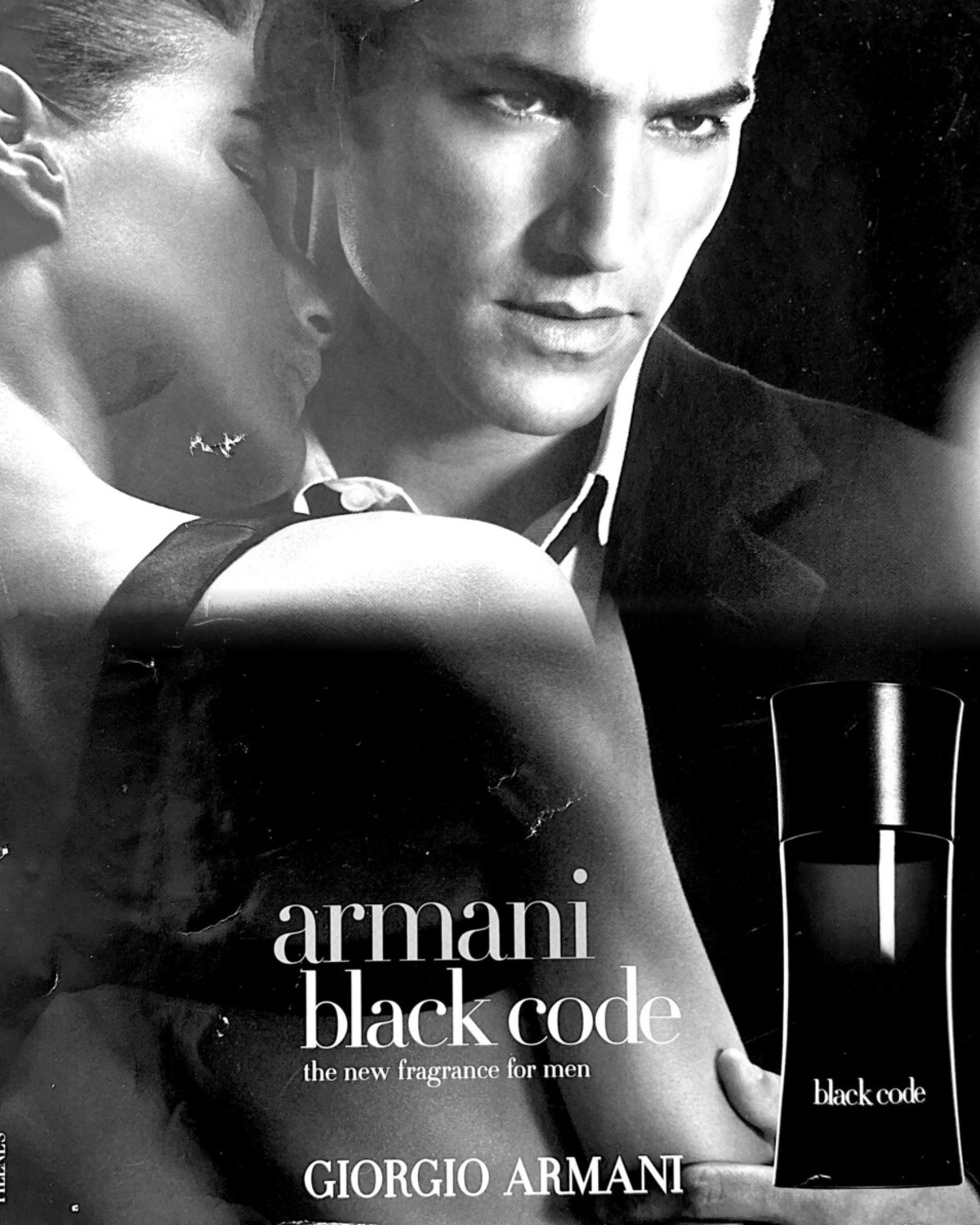
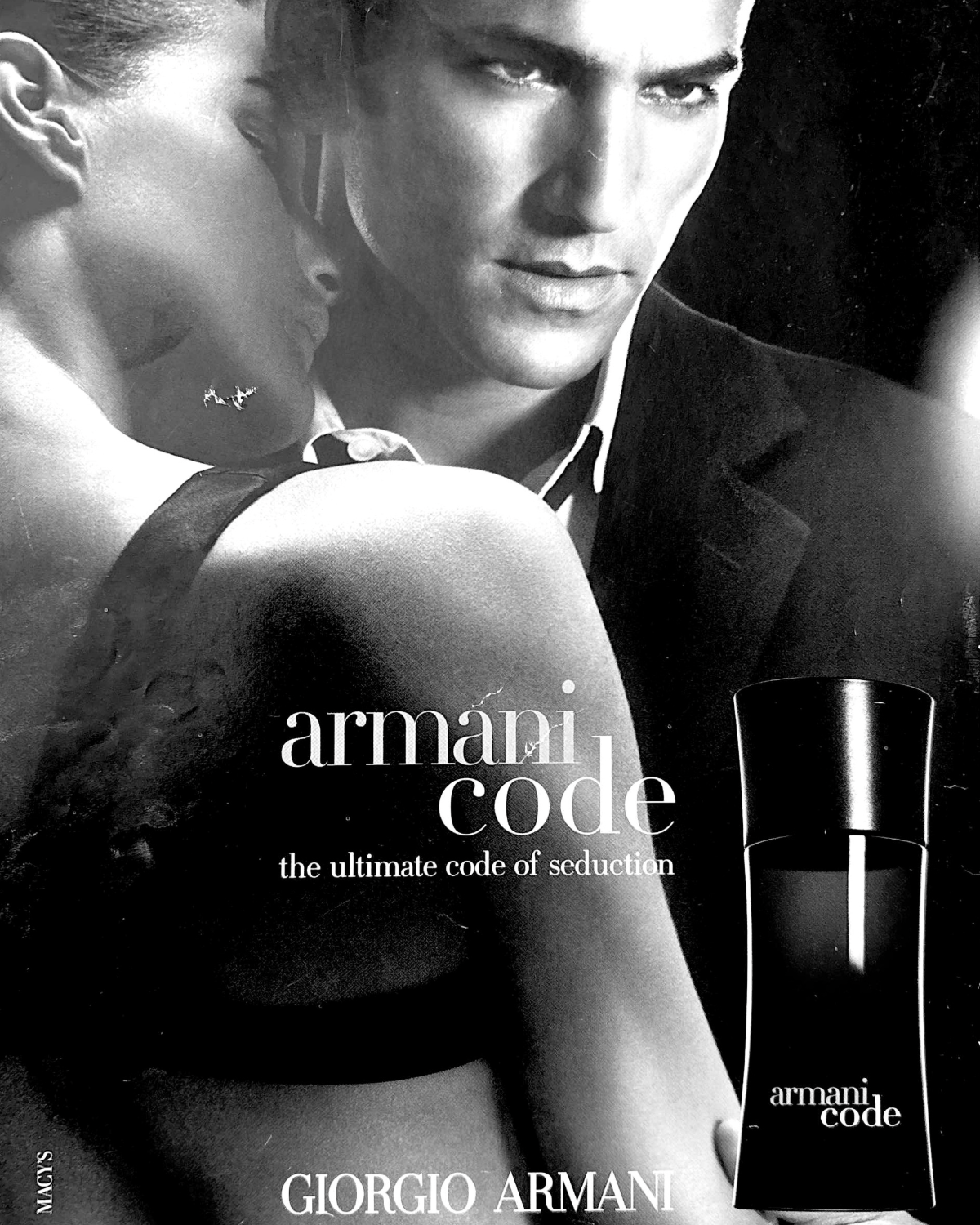
The advertisements
The fragrance was renamed between the two campaigns.
Curriculum Persuasive Writing Campaign
While an eighth-grade class was studying the Black Codes, a student flipping through a magazine noticed a cologne on the back cover called Black Code. She brought the ad to me and asked whether I found it offensive too. I put her question to the class. What followed became a persuasive-writing unit for nearly 100 students, who researched the Black Codes, learned how an argument changes with its audience, and wrote to newspapers, retailers, and Armani itself. Their letters were published in the Needham Times.
ProcessStarted with a student’s question that wasn’t on the syllabus. She agreed to bring it to the class, the class wanted to take big, bold action, and I taught them what might actually work: assume good intentions on the other side, explain what they may not know, and name a clear fix.
The fragrance was renamed between the two campaigns.
Nearly 100 students adapted their arguments for different real audiences. These three letters — sent to a newspaper, a retailer, and Armani — show how the ask changed with the audience.
Newspaper
Dear Editor of the Boston Globe,
I am a student at Pollard Middle School. I am writing on behalf of the concerns that my Social Studies class has with a new product from Giorgio Armani. In class, we had recently gone over the Black Codes. Black Codes are laws, which limited the freedom of African Americans in 1866. Our class recently discovered that Giorgio Armani had come out with a new perfume, which happens to be named the Black Code.
Our class not only finds the name of the perfume offensive, but I’m sure that many others who know of the Black Codes would find this extremely offensive, especially African Americans. Basically, calling the perfume Black Code is like calling it slavery. Even though we are sure that Giorgio Armani did not create this new perfume to be offensive, as well as racist, in any way, we of Pollard Middle School feel that something should be done sooner rather than later.
With that in mind we decided to take matters into our own hands, by contacting reliable sources, contacting the company Armani itself, as well as contacting stores that may carry the perfume. We soon hope to raise awareness and make a statement about the situation at hand, and we hope that Giorgio Armani will decide to change the name of one of its newest products.
Thank you for taking the time to learn and hear about our concerns reflecting the new Giorgio Armani perfume, Black Code.
Yours Sincerely,
Retailer
Dear Sephora Representatives:
I am a 8th grade student at Pollard Middle School in Needham, Ma and right now we are studying a timeline of important events that have happened in America’s history. While going through a news paper the other day, I came across the add for the new Armani cologne called black code that is an item that you are selling at your stores. I don’t know if you know this but the black codes were very harsh laws made after slavery was abolished that limited black’s rights, and basically brought slavery back. The name black code for this cologne is extremely racist and insulting to black and whites alike. This is like saying “the black codes were good”, and it is also like Armani is not thinking of how this name may deeply affect other people.
Although it is not your fault for the name of this cologne, I strongly suggest that you stop selling it or ask the Armani Company to rethink the name to make it better for business and for how people think of you and the Armani Company. I also think that if you do take action more people will end up buying this cologne because the name no longer insulting to them. For example, a few people who I asked said they wouldn’t buy that cologne just because of its name, and as people get more informed, business could get slower.
This may seem like it is asking a lot, but please consider some of the options I listed above, but if you chose not to listen I just hope that you have learned something about what black codes are from this letter. Thank you for your time and I look forward to hearing from you soon.
Sincerely,
Company
Dear Giorgio Armani Representative:
I am an eighth grade student at Pollard Middle School in Needham, MA. I have become aware that you sell cologne by the name of “Black Code”. This name for your product crosses paths with an embarrassing time period in United States history.
Slavery was prevalent in the 1800’s. The Southern states farmers needed slaves to work on their plantations. They relied on them to do everything around the farm. Northern states wanted to abolish slavery. This is why our country had a Civil War. After the Union won the war, all slaves were to be freed. The Southern states refused to comply with these orders and compiled a document called the Black Codes. This document once again, severely limited Blacks freedom.
By naming your cologne “Black Code”, you are losing minority customers and making an image that your company is racist. My friend and I contacted you by phone and one of your “secretaries” stated that Giorgio Armani was trying to make the name a “James Bond” theme. As far as I know, James Bond had no connection to Slavery in the 1800’s and never openly admitted hating black people. If Mr.Armani loves the name “Black Code” so much, he could make it easier on himself and name the cologne “Slavery”. Please raise this serious matter at your next company meeting. I look forward to hearing from you. Please contact me at the address above when any action is taken on this matter.
Sincerely,
Transcribed from the original student letters. Original wording and mechanics are preserved; mailing addresses, signatures, and student names are withheld.
A readable transcription presents the complete article; the source scan remains available for inspection.
Needham Times · Thursday, November 10, 2005
Students protest cologne name
By Valentina Zic · Staff Writer
They may be just 13 years old, and most probably don’t wear cologne or perfume yet, but Pollard Middle School eighth-graders are taking a shot at fashion giant Giorgio Armani.
Dozens of students in several social studies classes began a campaign recently to take the Armani cologne Black Code off the market, claiming the product’s name is racist and offensive. Another option, they said, would be for Armani to simply change the name.
The Pollard project began while eighth-grader Ariana Lymberopoulos was working on a project for her social studies class, creating a series of slides illustrating important events of the 1800s. One of her slides included a description of the Black Codes, implemented by Southerners to limit the rights of blacks following the emancipation of slaves.
As she worked, Lymberopoulos felt the urge to procrastinate just a little bit, so she began flipping through the fall issue of Boston Common magazine. On the back cover she noticed an advertisement for Armani’s Black Code.
“I thought, oh my gosh, this is racist,” Lymberopoulos said.
She brought the ad to school and showed it to her social studies teacher, Leah Grabelsky, asking if Grabelsky found it offensive, too.
“As a teacher, I couldn’t dream of anything better,” Grabelsky said.
She shared the advertisement and Lymberopoulos’ observation with the rest of the class and with other social studies classes in the cluster as well.
“We had a lot of really great conversations,” Lymberopoulos said.
Student Nina Gurwitz was surprised by the ad. “It was amazing, because why would they sell a perfume like that?” Gurwitz said.
Classmate Jacob Berns had a less intense response. “I didn’t have a big reaction at first, but when I thought about it, I thought it would be offensive to some people,” Berns said.
One student observed that since Armani is based in Italy, perhaps the company might not be familiar with the Black Codes.
One thing led to another, and pretty soon every student in each of the social studies classes was writing a letter of protest. Some sent their letters to newspapers, including the Needham Times, the Boston Globe or the Washington Post. Others sent their letters directly to Armani headquarters in Italy.
Grabelsky also gave her students extra credit points if they called Armani or spoke to merchants who sold the cologne.
Two students, Mike Koufos and Chris Gates, took it upon themselves to call a United States Armani base. The spokeswoman, they said, told them Armani did not intend to make a racist comment and that the name of the cologne was supposed to evoke a James Bond-like theme. Both, however, said the representative was somewhat rude.
“The lady we spoke to was totally unprepared to make a statement,” Koufos said.
Another Armani representative faxed a statement to the Times stating that Armani had already made the decision to change the name of the fragrance to Armani Code.
“The new name symbolizes the essential definitions of timeless elegance by Giorgio Armani. The phase-in of the new name began several months ago and will be completed as quickly as possible,” the statement said.
Grabelsky, told of the news, said her initial reaction was one of disappointment, because it would have been a good feeling to know the change occurred because of the work the students did.
The Armani statement does not explain why the decision to change the name was made.
Internet searches for “Armani Code” still yield only listings for “Armani Black Code.”
Lymberopoulos and other students also said they had seen Black Code on sale in many Boston area stores.
She said the students planned to continue their campaign because they did not hear back from Armani. “So we didn’t think they were going to change it,” Lymberopoulos said.
Asked how she felt about having started the campaign, Lymberopoulos admitted she was proud of herself and of her classmates for putting so much effort into it.
“It’s pretty new to me,” she said of her success. “It’s a good feeling.”
Transcribed from the complete source scan for readability.
The newspaper published student arguments alongside its coverage, documenting the civic-writing and publication outcome.
Letters to the Editor
I am an eight grader at Pollard Middle School in Needham. In my history class it has been brought up that Armani has a cologne out labeled, Black Code. Our class has also been going over American History for the past few weeks, and the Black Codes have come up.
The Black Codes were a set of laws after slavery was abolished, that tried to get ex-slaves back into plantation labor. Ex-slaves needed proof of employment to stay out of slavery, and children could be taken from their family and thrown into slavery without their parents say.
Because of this, some African Americans may feel uncomfortable or offended by this label. Even though you did not make this cologne, I do think that if the awareness of this issue was raised, then people may realize that it could be offending. I think that to correct this honest mistake, the Armani Company should either publicly make a statement saying that they did not intend to offend anyone, or they could change the label.
Jacob Berns
Pollard Middle School
My Social Studies class has been studying slavery. I thought you’d like to know that a recent product, Black Code fragrance for men by Armani, actually is racist.
The Black Codes were harsh laws that blacks had to follow. When slavery ended in 1865 the black codes started. The black codes were the same as slavery. Even though the slaves were free they still had to work from sunup to sundown without a paycheck and could not leave the plantation.
As you can see the black codes were very harsh. I would really like to see that you write an article concerning this issue.
Nina Gurwitz
Pollard Middle School
Recreated for legibility from the original clipping.
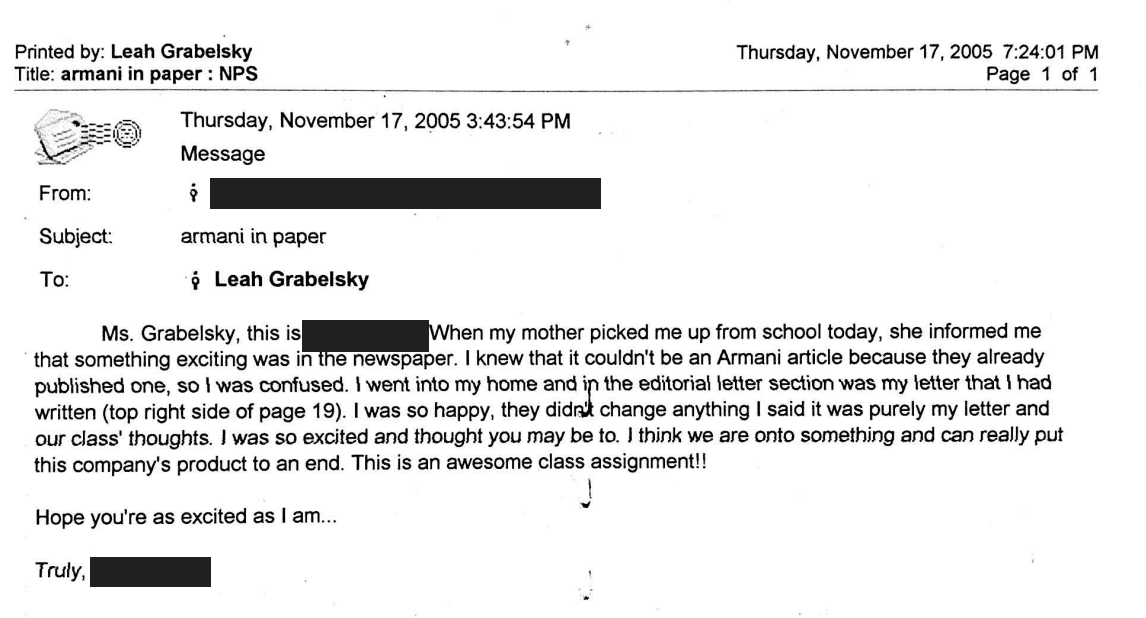
A student’s email captures the moment she saw her own words in print — and realized that student action could reach a real audience.
“I think we are onto something”