Designing Professional Learning

Good professional learning makes practice visible enough to try, adapt, and improve.

UnderstandDesignTryRefine

Expert teaching depends on tacit knowledge that is often difficult to make visible: what a teacher notices, why one instructional move is chosen over another, and how the teacher responds to unexpected student thinking. My district work focused on designing structures that made this expertise visible, supported learning across schools, and enabled educators to test new approaches in their own classrooms.

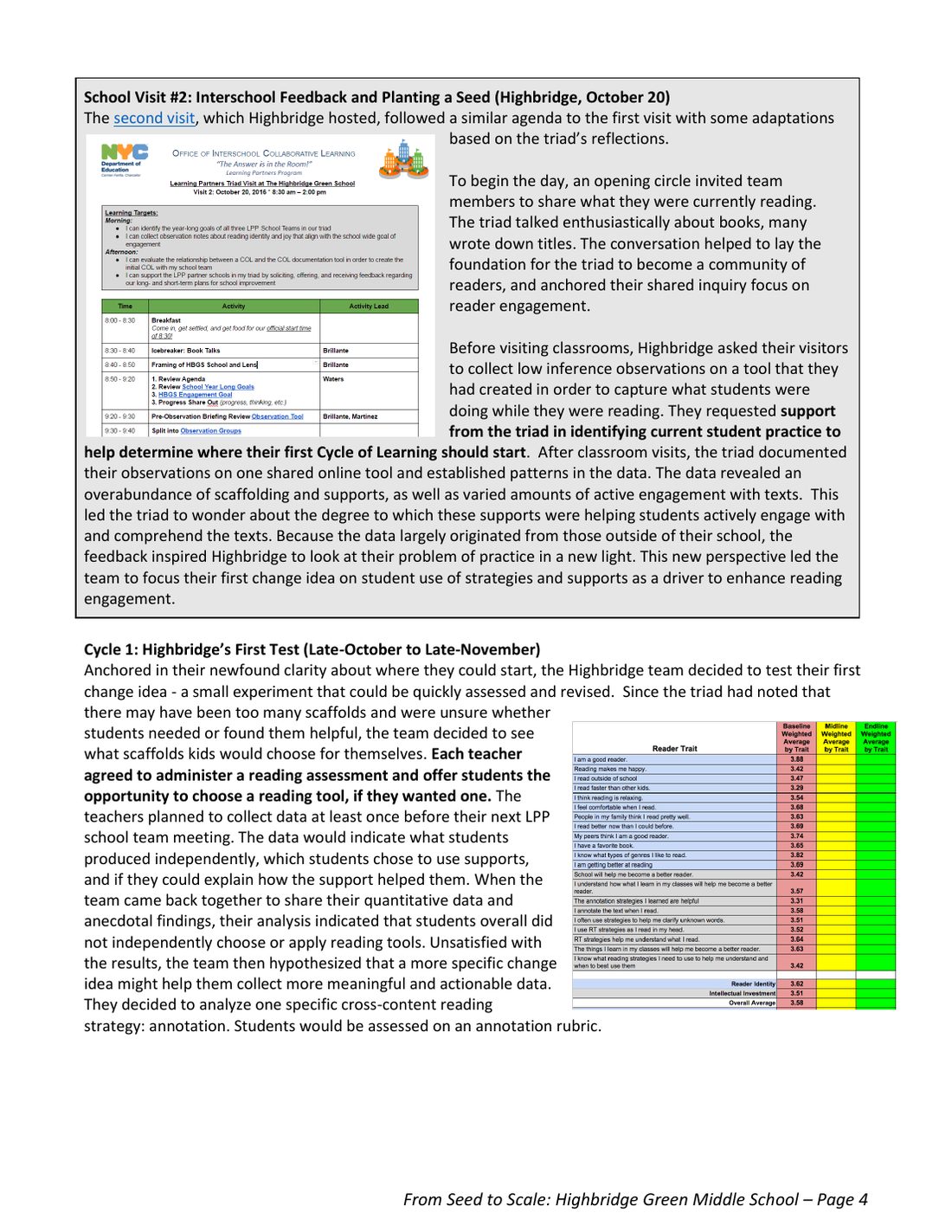
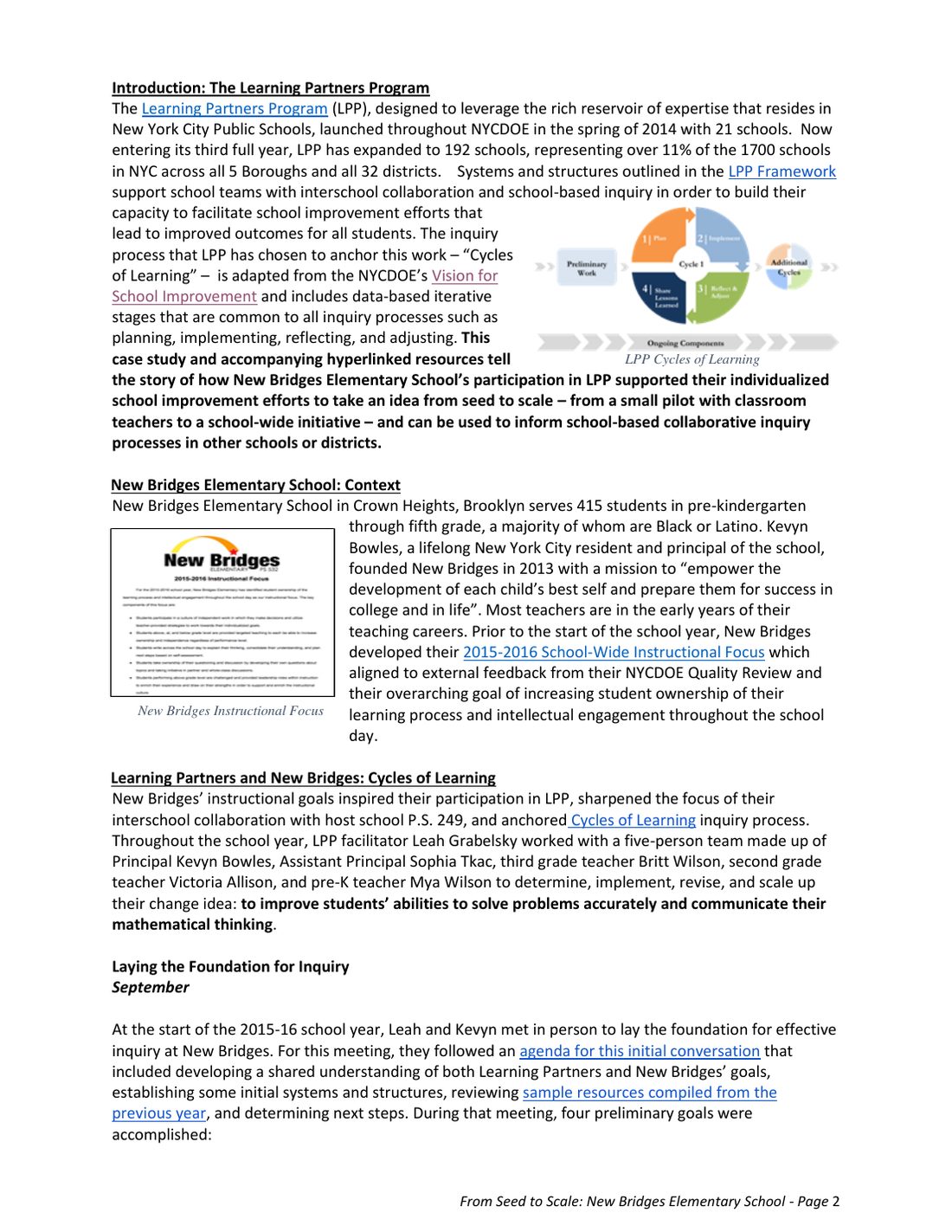
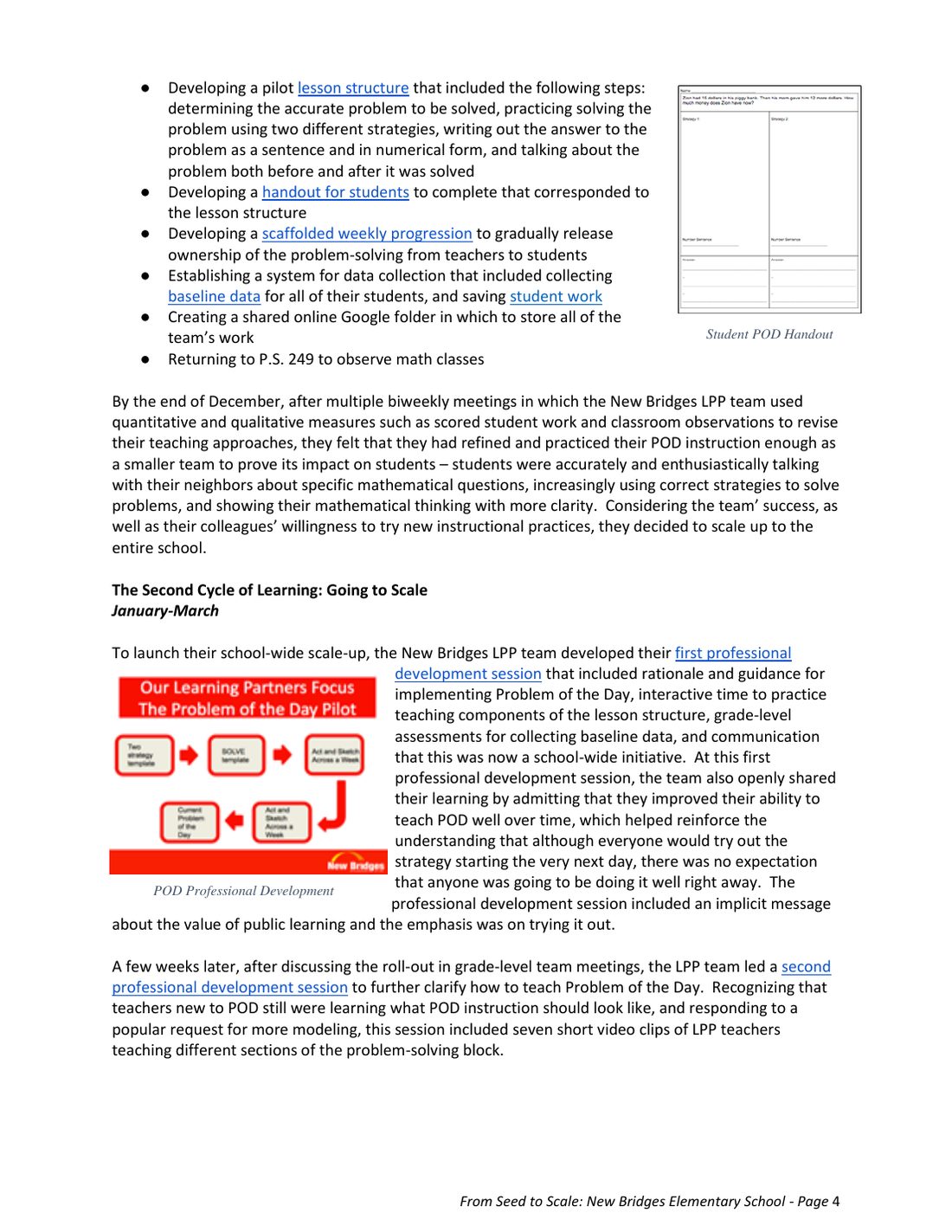
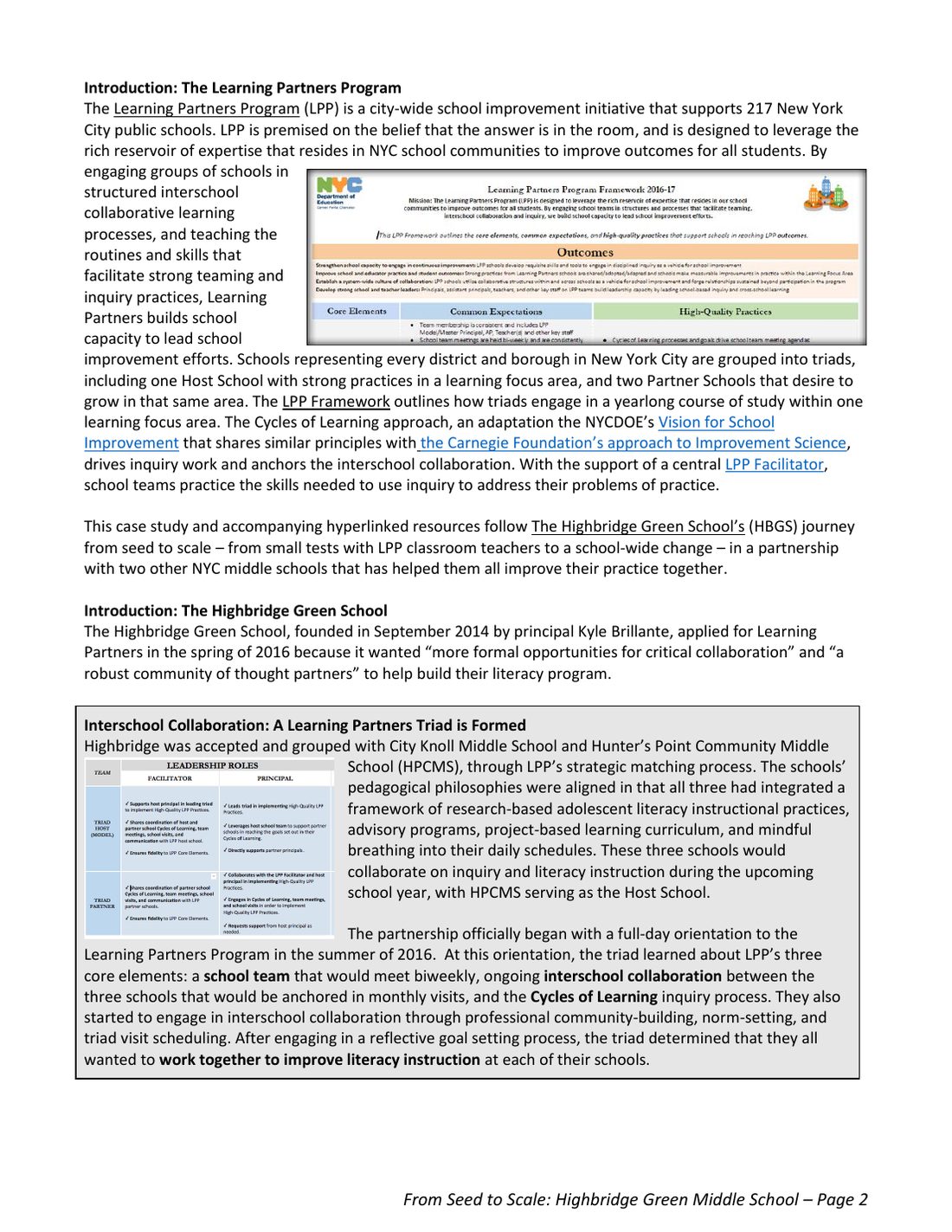
New Bridges case study interior page showing program context and evidenceNew Bridges case study interior page showing practice development and evidence

Original artifact: interior pages from the published New Bridges case study.

Designing a Program for Schools to Learn From One Another

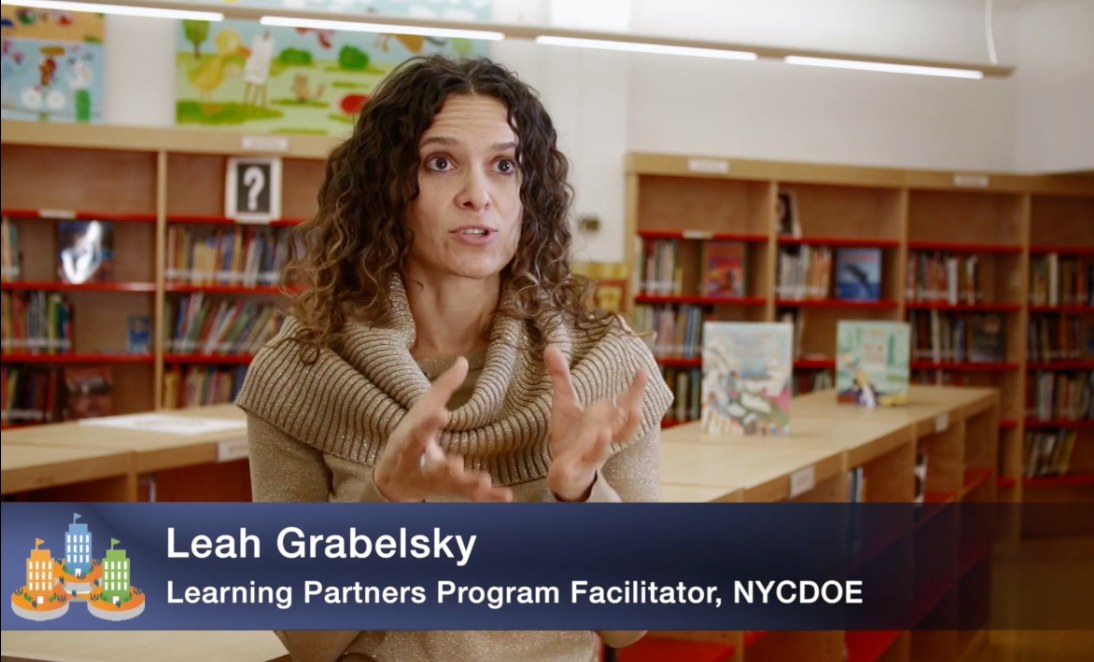
As Associate Director of Program Development and Design for the NYC Public Schools Learning Partners Program, I designed structures that let schools learn from one another’s practice: school triads, classroom visits, inquiry cycles, facilitated evidence reviews, and documentation that captured what teams were discovering.

Each triad paired one school with an established practice and two schools seeking to adapt it. Teams visited classrooms, tested the practice with their own students, analyzed evidence, and refined their approach.

The two case studies below trace how practice evolved from initial classroom use to broader school implementation. At New Bridges, a mathematics routine developed within one team and expanded schoolwide. At Highbridge Green, a literacy team repeatedly refined its inquiry question as new evidence challenged its assumptions. Both cases document improvement as an iterative process rather than a linear success narrative.

I designed the inquiry structures, facilitated team meetings and full-day cross-school visits, and documented the year’s implementation and learning in case studies and video resources designed for use by educators beyond the participating schools.

Test · Observe student evidence · Analyze · Refine · Document for transfer
Design Principles

Design Decisions

  • Effective transfer requires adaptation, not replication — Schools identified the principle underlying a practice, rebuilt it for their own students, and examined whether it remained effective.
  • Make productive uncertainty visible — Teams shared emerging results and open questions rather than presenting only successes, allowing colleagues to learn from both effective and ineffective attempts.
  • Center teacher expertise in professional learning — When teachers facilitated learning, their knowledge became explicit and available for colleagues to examine, adapt, and apply.
  • Document the learning process, not only the outcome — Useful documentation preserves decisions, early attempts, evidence, and adjustments so others can understand how the practice evolved.