Designing for Implementation

A strong idea requires a structure that supports implementation.

UnderstandDesignTryRefine

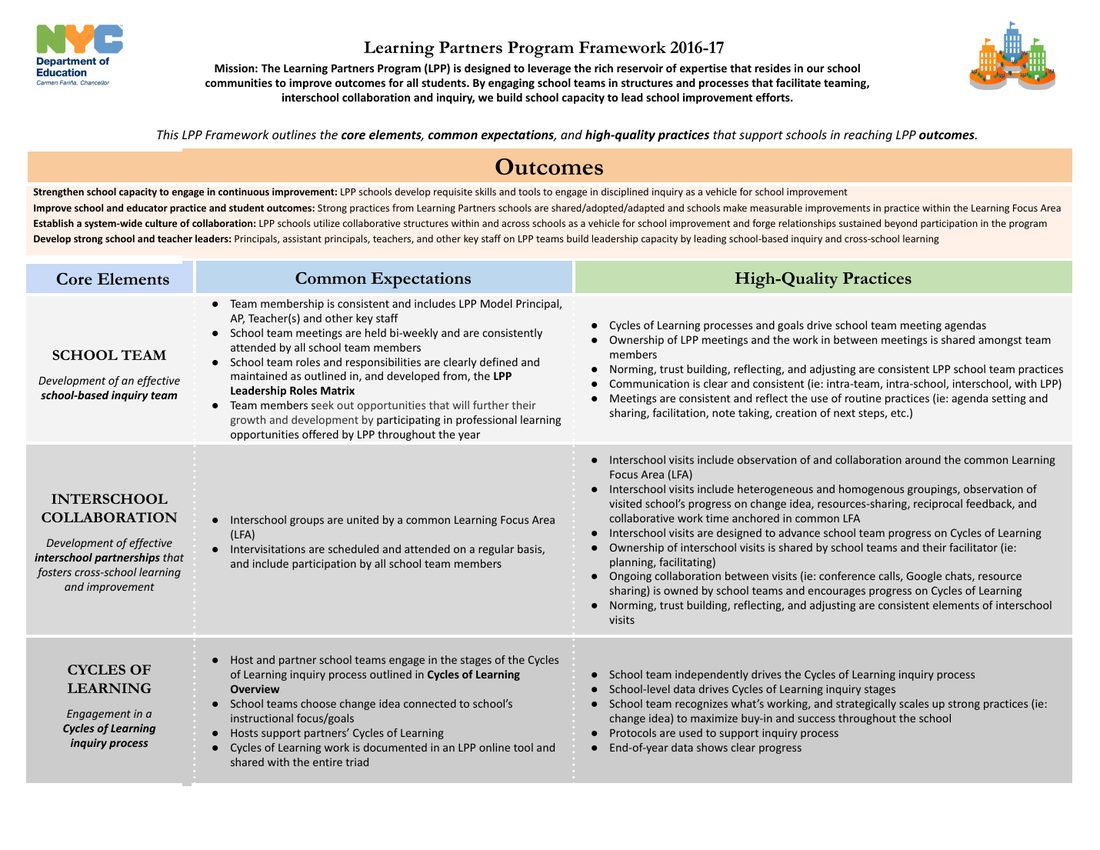
I design the practical infrastructure around educational work: handbooks, frameworks, roles, routines, and decision tools that clarify expectations and support implementation. The goal is to create coherence while preserving professional judgment.

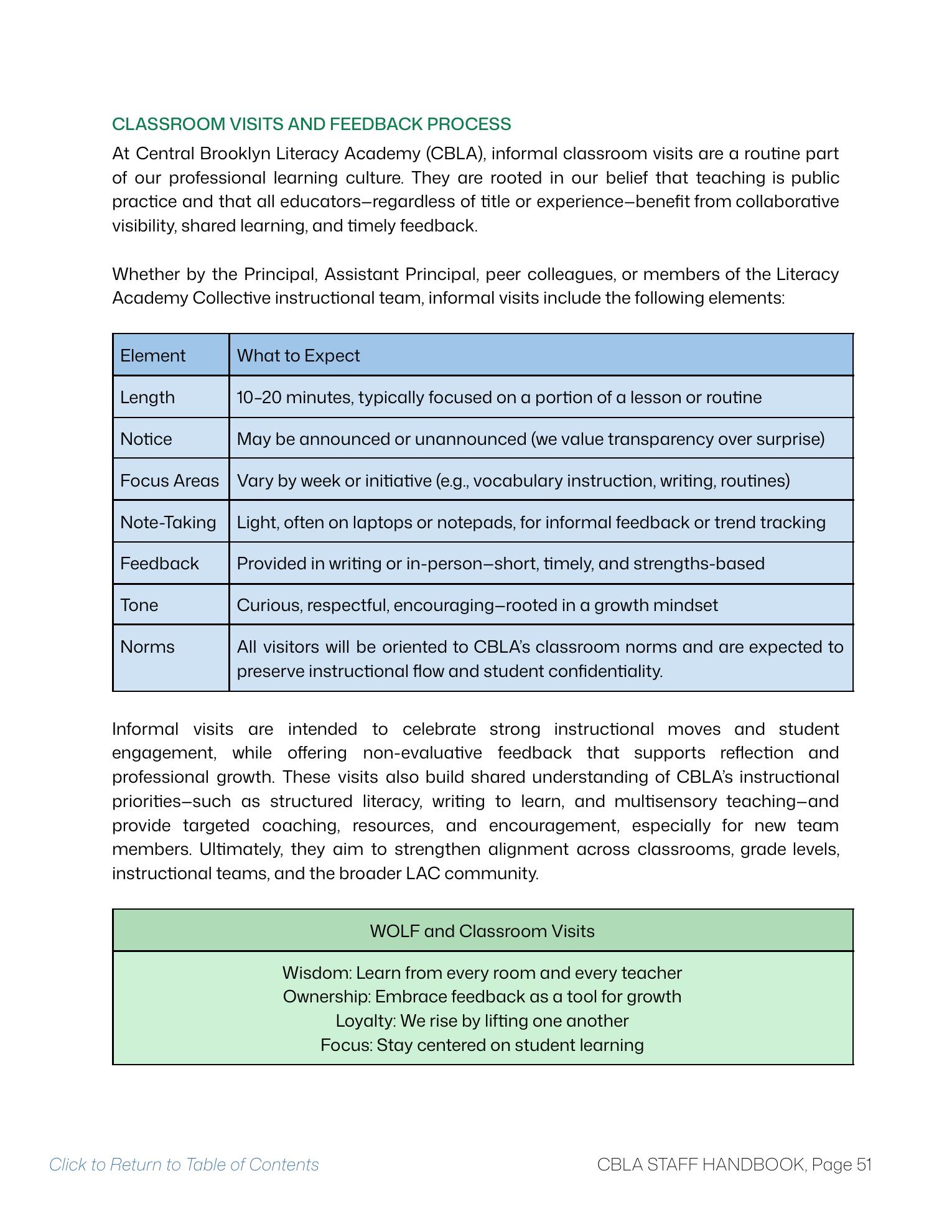
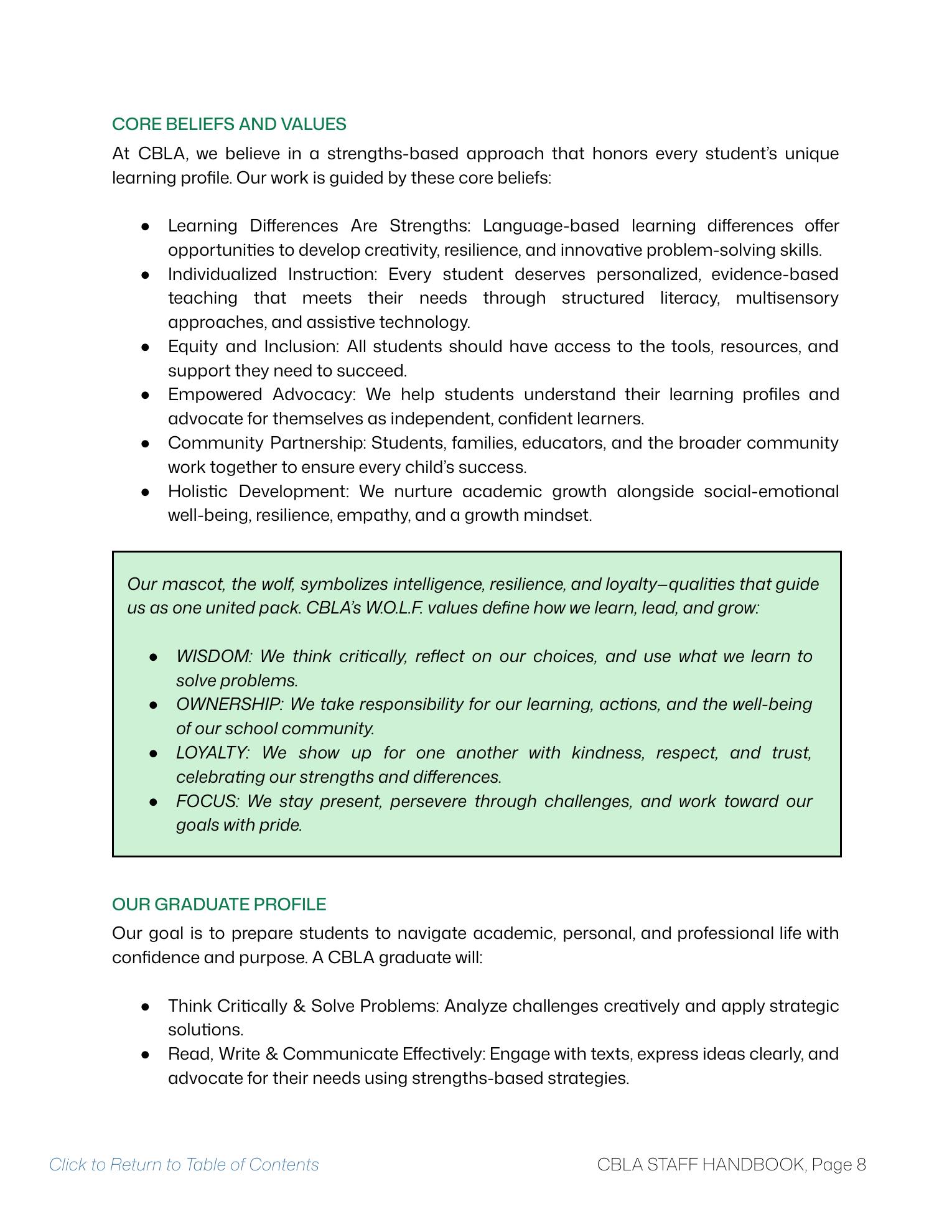
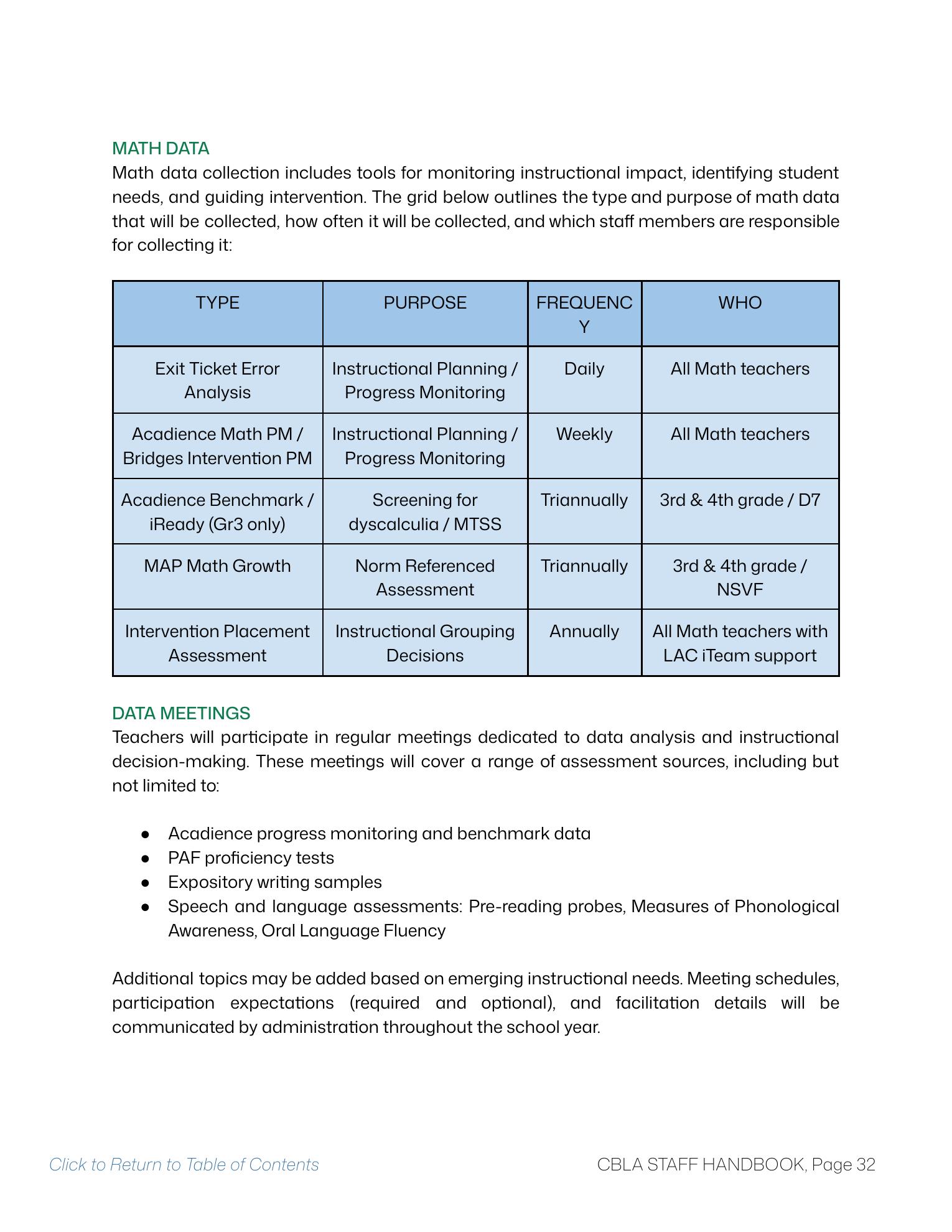
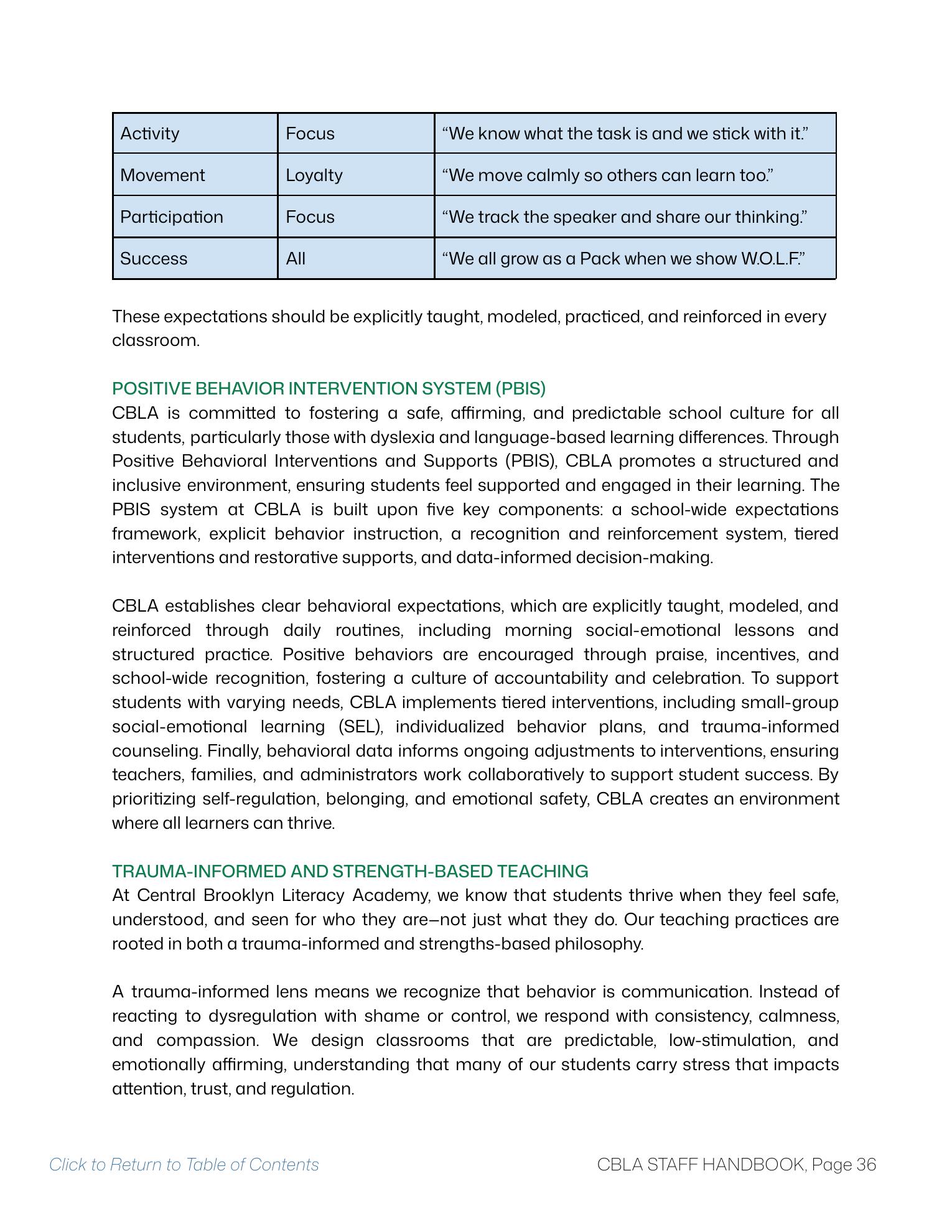
CBLA Staff Handbook page 8 with core beliefs, W.O.L.F. values, and graduate profileCBLA Staff Handbook page 32 with math data and data-meeting routines

Original artifact: interior pages from the CBLA Staff Handbook.

Translating a School Model Into an Operating System

In 2024–2025, I worked with the founding principal of Central Brooklyn Literacy Academy, a new NYC public school for students with dyslexia and language-based learning disabilities. My role was to translate the school model into the concrete structures staff would need to implement it.

The design challenge was to build an operating system before the school opened, before staff routines or implementation patterns existed. Working with the founding principal, I identified what needed to be explicit before launch—including instruction, curriculum, assessment, co-teaching, student support, professional learning, roles, routines, and communication—and translated that planning into the staff handbook.

The resulting handbook connects mission and core beliefs to instruction, curriculum, assessment, student support, staff development, and daily operations. The school’s four values are embedded across routines such as arrival, data meetings, and communication expectations, using consistent language throughout.
Design Principles

Design Decisions

  • Operationalize values in routines — A value becomes actionable when it is reflected in schedules, instructional practices, and recurring routines.
  • Make roles and expectations explicit — Clear roles, routines, and expectations support consistency for staff joining at different points in the year.
  • Create a single source of operational guidance — A well-designed handbook centralizes key information so staff can locate expectations and procedures efficiently.
  • Use structure to support professional judgment — Shared standards create consistency in decision-making without requiring identical responses in every context.